The short version
Google no longer treats your question as one search. It uses query fan-out: it quietly breaks your question into dozens of hidden sub-searches and builds one answer from them. That answer shows up on two surfaces that reward opposite things. The AI Overview box above the links wants the single cleanest answer it can quote. The AI Mode tab wants the deepest, most complete coverage. You no longer rank for one keyword, you compete across every hidden question inside it. The page that wins is the one that answers the buyer cleanly in the first two sentences, then covers the follow-up questions in depth below.
- Google now runs one search as dozens. Query fan-out splits a question into hidden sub-searches and builds a single answer.
- There are two AI surfaces. The AI Overview box rewards the cleanest answer; the AI Mode tab rewards the deepest coverage.
- You no longer rank for one keyword. You compete across the dozens of hidden questions buried inside it.
- Depth is surface area, not word count. A page that answers more real sub-questions gets pulled into more answers.
- Build one page that wins both: a clean answer in the first two sentences, then the follow-up questions as headings below.
Google now runs one search as dozens. Here is the intent split between AI Overviews and AI Mode, why going deeper suddenly wins, and the one page that gets named on both. The goal is not to chase every AI tool. The goal is to build a useful marketing system that a real team can understand, repeat, and improve.
Google stopped treating your question as one search
For years, getting found meant ranking one tight page for one keyword. Google has quietly changed the rules. It now takes a single question and runs a technique called query fan-out: it splits that question into dozens of smaller, hidden searches, then stitches one answer together from all of them. You never see the sub-searches. Your content is either pulled into them, or it is not.
Here is the concrete version. A buyer searches for the best CRM for a small agency. The old Google handed back ten links. AI Mode now runs separate searches for agency pricing, integrations, migration pain, and real reviews, then builds one answer from the pieces. The question looks the same. What happens behind it does not.
Two surfaces, two games
Google's AI search is not one thing. It is two, and they want opposite things from you. This is the part almost everyone gets backwards.
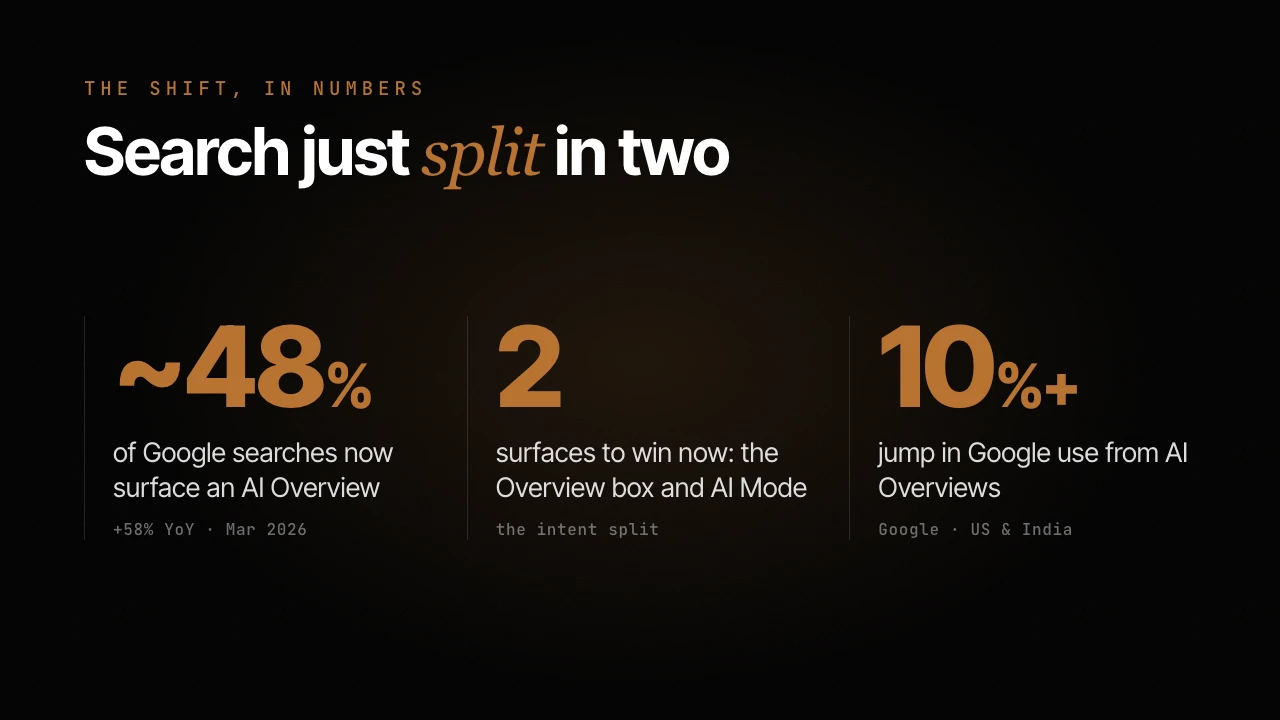
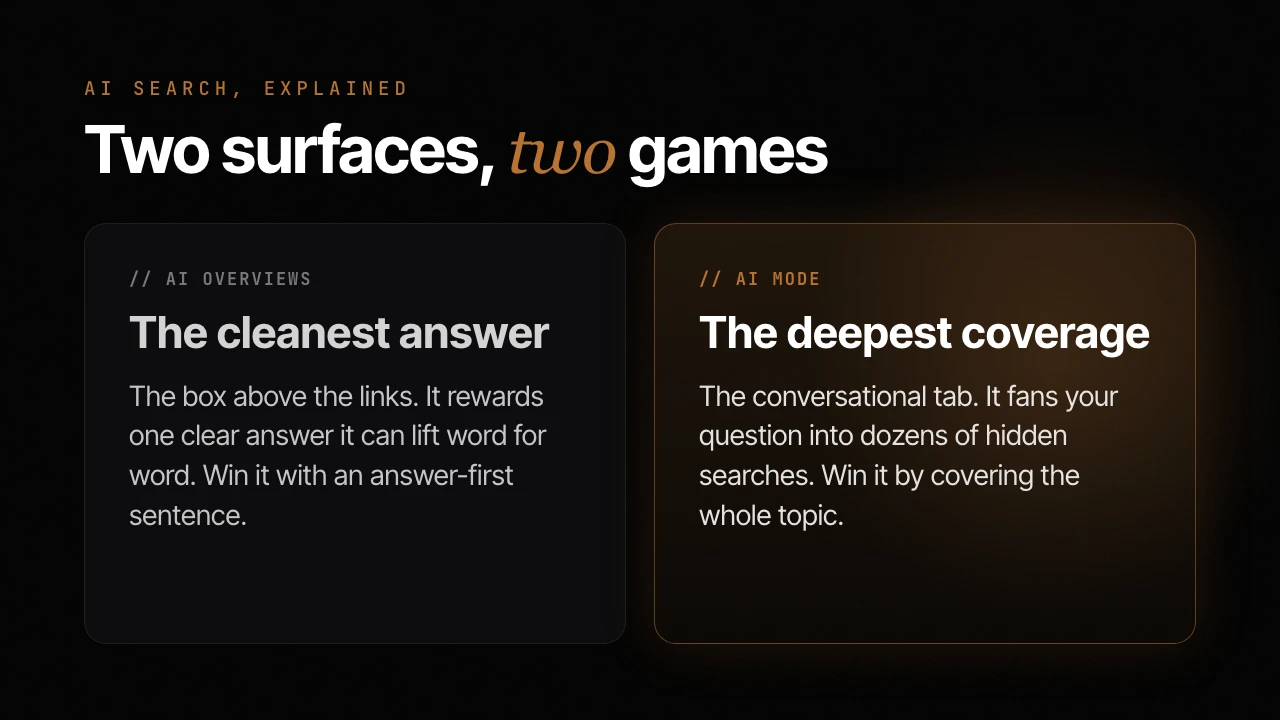
The first surface is the AI Overview, the summary box that sits above the blue links. It shows up most on plain, informational searches, and it now appears on roughly 48% of Google searches, up 58% year over year as of March 2026. It wants the single cleanest answer it can lift word for word.
The second surface is AI Mode, the dedicated conversational tab. You ask a full question, and behind the scenes Google runs the fan-out, splitting it into dozens of sub-searches for pricing, integrations, reviews, and the catch nobody mentions, then stitches the answer together. It wants depth and complete coverage. Win the Overview and lose the fan-out, and you still get skipped the moment a buyer asks a real question. One page can win both: a clean answer up top, real depth below.
Why going deeper suddenly wins
For years the move was one tight page per keyword. Fan-out flips that. When Google explodes your buyer's question into dozens of sub-questions, a thin page answers one of them and goes quiet on the rest.
A page that actually covers the topic, the price, the tradeoffs, the comparison, the thing people get wrong, shows up in more of those hidden searches, so it gets pulled into the answer more often. Depth is not padding. It is surface area. The more real sub-questions you answer well on one page, the more chances you have to be the source Google reaches for.
The play this week: one page, both surfaces
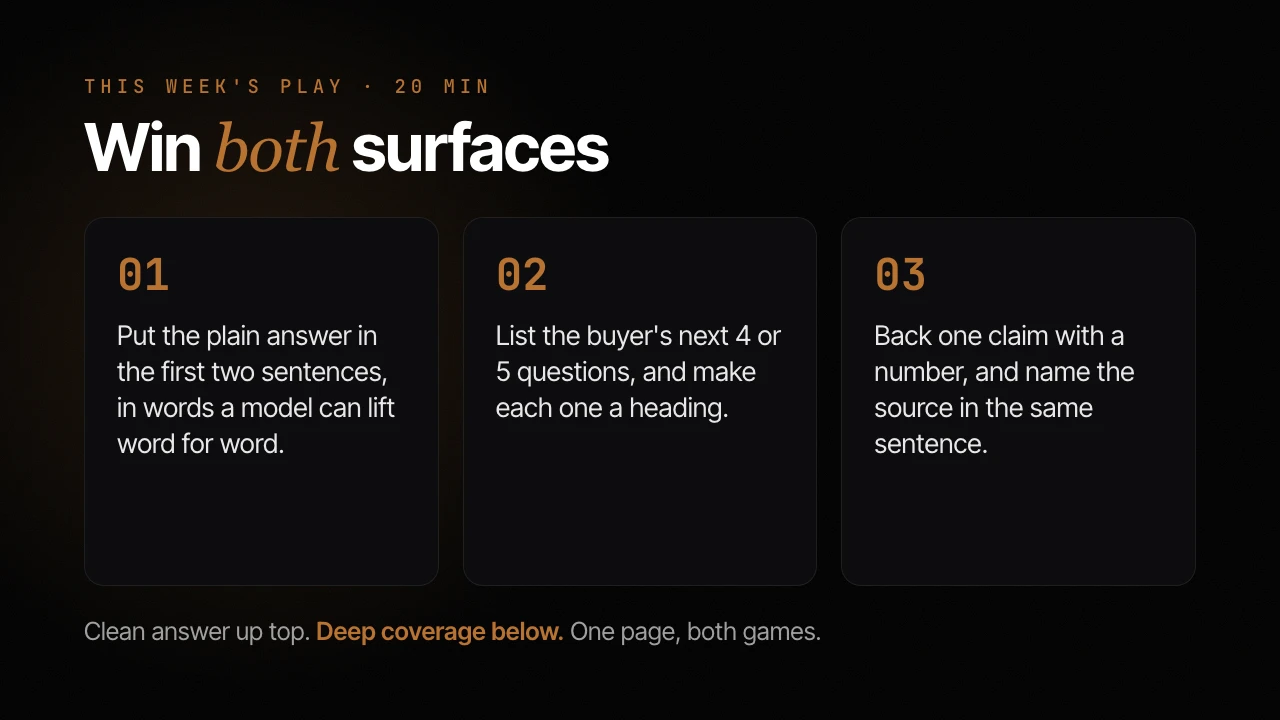
Pick one page that should be the answer to a real buyer question. Then do three things to it, in about twenty minutes.
- Put the plain answer in the first two sentences, in words a model can lift word for word. That is your shot at the Overview.
- List the next four or five questions that buyer asks, and make each one a heading on the page. That is how you show up across the fan-out.
- Back one claim with a number and name the source in the same sentence. That is what makes it safe to quote.
One prompt to run today
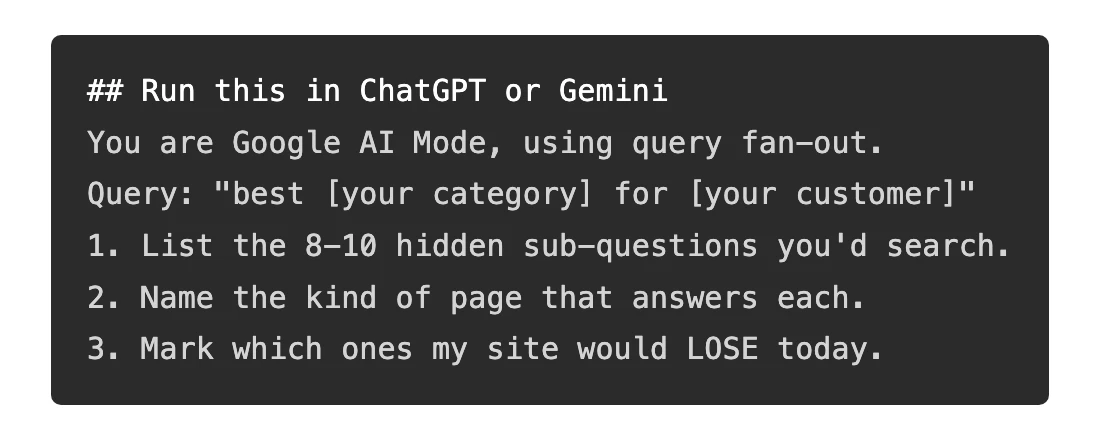
Stop guessing which sub-questions you are losing. Paste the prompt below into ChatGPT, Gemini, or Perplexity, and swap in your category and customer. It tells the model to act like Google AI Mode, break your main question into the eight to ten hidden sub-questions it would search, name the kind of page that answers each, and mark which ones your site would lose today.
That last list is basically your content plan, ranked by what is costing you the most. Run it before you write anything else this week.
FAQs
Questions this resource answers
What is query fan-out in Google AI Mode?
+
Query fan-out is how Google AI Mode answers a question. Instead of matching your query to ten links, it splits the question into dozens of hidden sub-searches, for pricing, integrations, reviews, and more, then builds one answer from all of them. Your content is either pulled into those sub-searches or left out.
What is the difference between AI Overviews and AI Mode?
+
They are two surfaces that reward opposite things. The AI Overview is the summary box above the links, and it rewards the single cleanest answer it can quote. AI Mode is the conversational tab, and it rewards the deepest, most complete coverage through query fan-out. One well-built page can win both.
Should I write one page per keyword, or one deeper page?
+
Go deeper. Fan-out breaks a buyer's question into many sub-questions, so a thin one-keyword page answers only one of them. A page that answers the price, the tradeoffs, the comparison, and the common mistake shows up in more of those hidden searches and gets cited more often. Depth is surface area, not word count.
Free kit
See the exact prompts where buyers are deciding, which sub-questions you are losing, and who AI names instead of you. Run the free check→
One useful AI tool a week
Short notes. Practical systems. No daily emails.