The short version
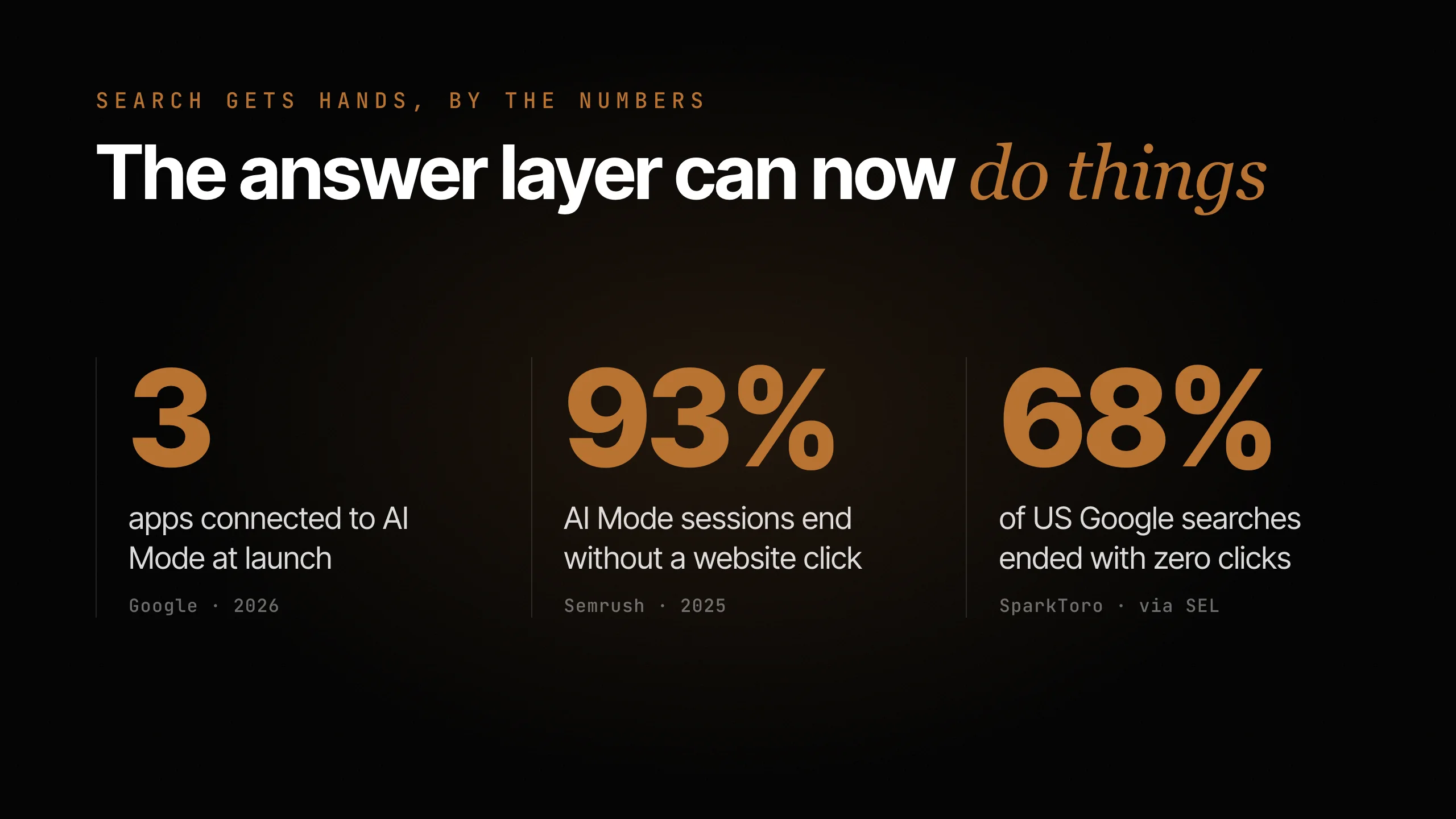
Google just taught the answer layer to finish the job. On July 16, 2026, it started rolling out connected apps in AI Mode, starting with Instacart, Canva, and YouTube Music in the US, with more coming. Now your buyer can go from a question to a filled cart, a drafted flyer, or a saved playlist without ever opening a website. The task completes inside the answer. That adds a second visibility question. Not just does the AI name your brand, but when the question becomes a task, who gets handed the job. The click was already fading. 93% of AI Mode sessions end without a click to a website, and 68% of all US Google searches ended with no click in early 2026. Connected apps take the next step, finishing the task itself. So your marketplace listings, your app profiles, and your data inside the platforms AI acts through are search assets now. Widen what you count as showing up, and audit how you look on the shelves where your category's tasks complete.
- Google started rolling out connected apps in AI Mode on July 16, 2026: Instacart, Canva, and YouTube Music first, US only, more coming.
- There is a second visibility question now. Not just whether AI names your brand, but whether it hands the task to your app.
- The click was already fading. 93% of AI Mode sessions and 68% of US Google searches end with no click.
- Your Instacart, marketplace, and app listings are search assets now. Treat their titles, images, and reviews like your homepage.
- Search Console added Platform Properties, so you can now see how your Instagram, TikTok, X, and YouTube posts perform in Google Search.
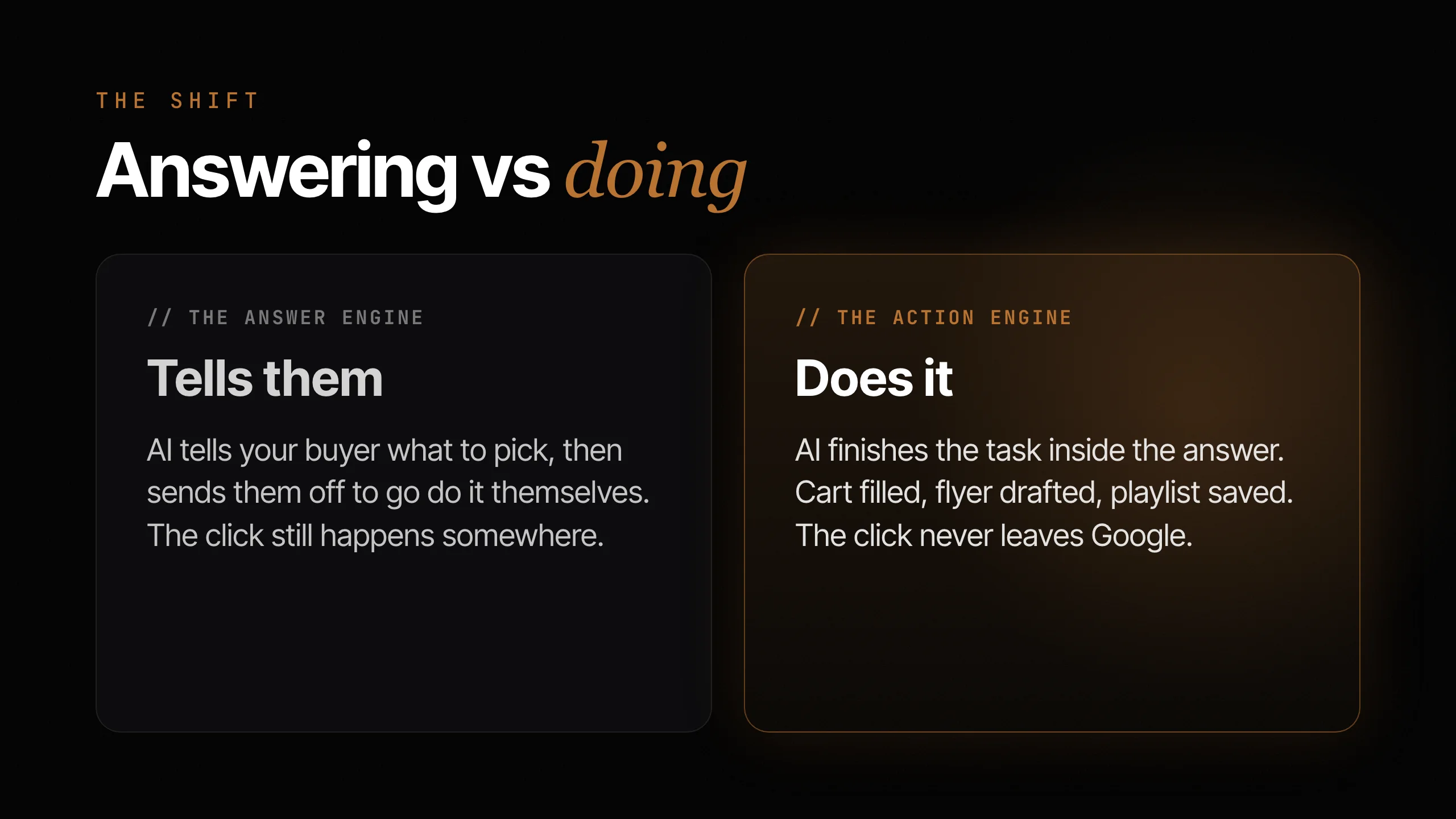
AI Mode now fills the cart and drafts the flyer inside the answer. Visibility is no longer just whether AI names you, but whether it hands the task to you. The goal is not to chase every AI tool. The goal is to build a useful marketing system that a real team can understand, repeat, and improve.
Search stopped answering and started doing
Picture your buyer planning a barbecue. Old world: they search, read a recipe, open ten tabs, build a shopping list, then go order it somewhere. Every one of those tabs was a chance to meet your brand.
New world, live this week: they ask AI Mode, and the AI builds the ingredient list and adds it straight to an Instacart cart. Someone making a flyer gets Canva templates inside the answer. Someone planning a party gets a playlist saved to YouTube Music. Google announced the rollout on July 16, US only for now, and says more apps are coming soon. Three apps is a pilot. A list of a hundred apps is a new shelf, and getting on that shelf becomes its own competition.
The numbers say the click was already dying before this. 93% of AI Mode sessions end without a single click to a website (Semrush, 2025). Across all of Google in the US, 68% of searches ended with no click in early 2026 (SparkToro study, reported by Search Engine Land, 2026). Connected apps take the next step: now even the task behind the search can finish without you.
Your website was where questions turned into customers. If the question turns into a done task inside Google, the handoff happens on someone else's shelf. Search Engine Journal put it plainly: in categories where AI Mode can pass a task to a connected app, being on that list is a second visibility question sitting alongside whether your page ranks.
The action happens on a shelf you already have
Here is the part people miss. You cannot control which apps Google partners with. You can absolutely control how you look inside the platforms where your category's tasks complete.
If you sell food products, your Instacart and grocery marketplace data is now part of your search presence. If you serve local customers, your booking and delivery platform profiles are. The AI picks from what those platforms know about you: titles, images, descriptions, reviews, availability. Thin data there now costs you twice, once in the app's own search and once in every AI answer that routes through it.
This week's play (20 min)
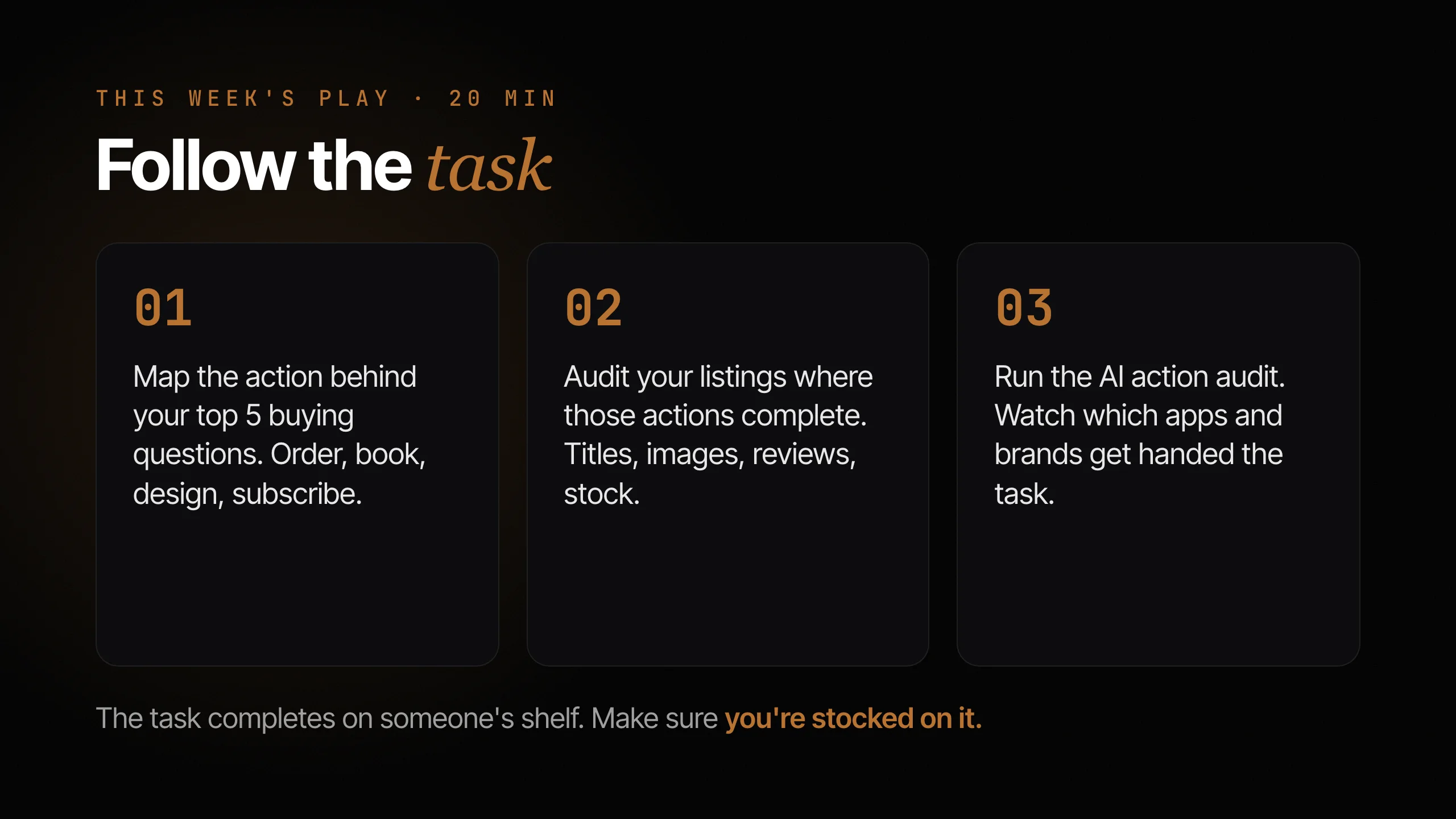
Three moves to make sure your brand is stocked on the shelf where the task lands.
- Map the action behind your top five buying questions. For each question your buyer asks, write down what they do next: order, book, design, subscribe, download. That do step is where the task layer will land.
- Audit your presence on the platforms where those actions complete. Open your listings on the marketplaces, booking tools, or app ecosystems in your category. Check titles, images, descriptions, reviews, and stock like they were your homepage. For many buyers, they now are.
- Run the AI action audit with the prompt below. Ask the AI to complete a task in your category and watch which apps and brands it reaches for. Where you are absent is your roadmap.
One prompt to run
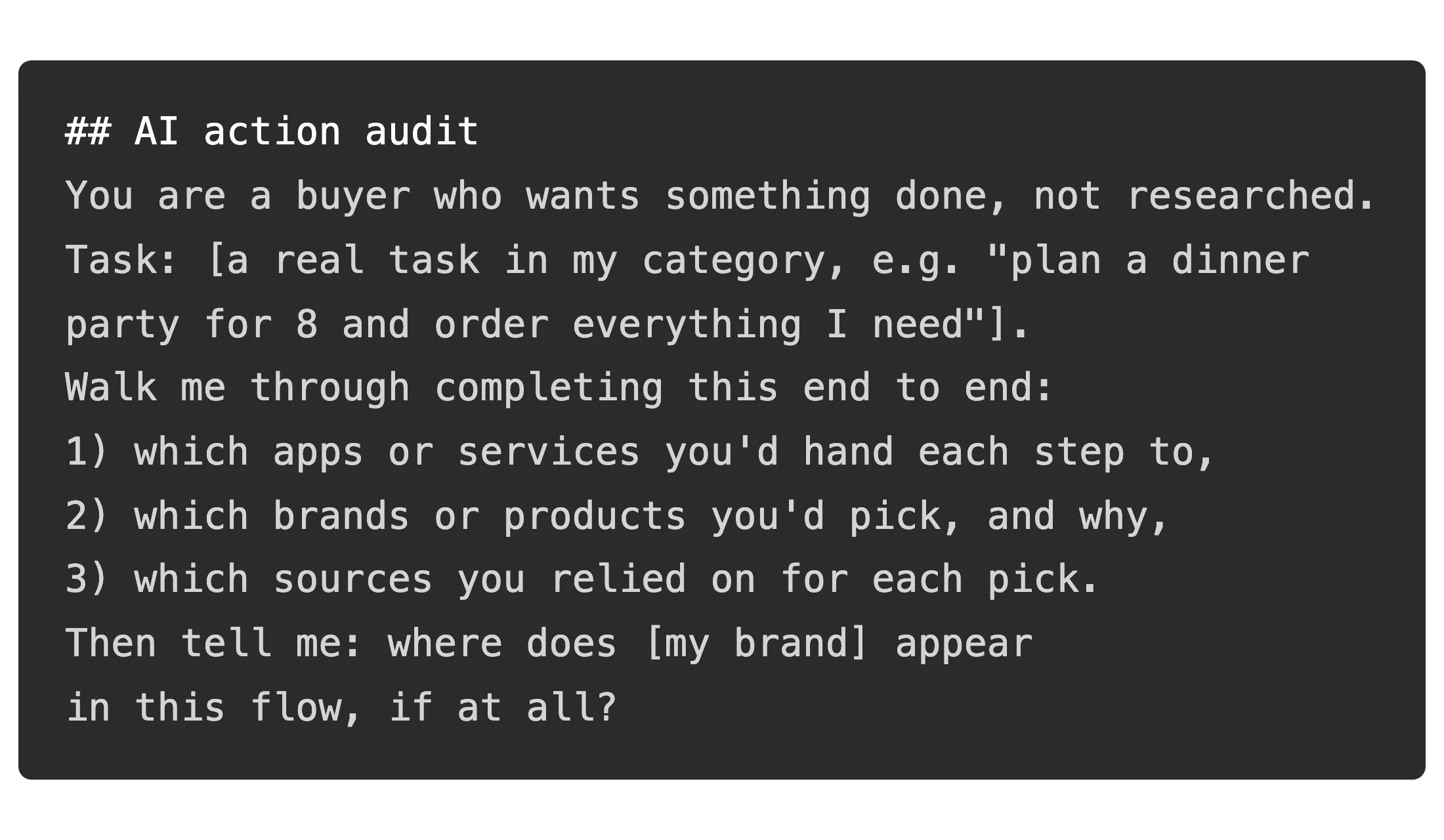
Paste this into Google AI Mode, ChatGPT, and Perplexity. Swap in a real task from your category. The apps and brands the AI reaches for are your new competition for the task.
AI action audit prompt: You are a buyer who wants to get something done, not just researched. Task: a real task in my category, for example plan a dinner party for 8 and order everything I need. Walk me through completing this end to end: 1) which apps or services you would hand each step to, 2) which brands or products you would pick, and why, and 3) which sources you relied on for each pick. Then tell me: where does my brand appear in this flow, if at all?
The bottom line
When your buyer's question turns into a task, which app does the AI hand it to? Is your brand inside that app, or only on your own website? If the click never comes, where does your next customer actually meet you?
The answer layer got hands this week. Make sure the things it can pick up have your name on them. Your website answers questions. The task layer finishes them. You need to be present for both halves.
FAQs
Questions this resource answers
What are connected apps in Google AI Mode?
+
Connected apps let AI Mode complete a task inside the answer instead of just describing it. Google started rolling them out on July 16, 2026, with Instacart, Canva, and YouTube Music in the US first. Your buyer can go from a question to a filled cart, a drafted flyer, or a saved playlist without visiting a website, and Google says more apps are coming.
What is the task layer in AI search?
+
The task layer is the point where an AI answer stops explaining and starts doing: filling a cart, drafting a design, or saving a playlist. It adds a second visibility question beyond whether AI names your brand, which is whether the AI hands the task to your app or product when the question becomes an action.
How do I get my brand picked in the AI task layer?
+
You cannot control which apps Google partners with, but you can control how you look inside the platforms where your category's tasks complete. Audit your marketplace, booking, and app listings the way you would your homepage: titles, images, descriptions, reviews, and availability. The AI picks from what those platforms know about you, so thin data there costs you in both the app and every AI answer that routes through it.
What are Platform Properties in Google Search Console?
+
Platform Properties is a new Search Console report that shows how your Instagram, TikTok, X, and YouTube content performs in Google Search and Discover, with clicks, impressions, and the queries that surfaced your posts. You do not need a website to use it. It is the first time Search Console has reported on content you do not host.
Free kit
Run the visibility half of this check with the free AI Search Audit. It scores how findable and citable you are across ChatGPT, Perplexity, Google AI, and Claude, and shows the first thing to fix. It takes about two minutes. Run the free audit→
One useful AI tool a week
Short notes. Practical systems. No daily emails.