The short version
Google Preferred Sources is a setting where a reader tells Google which publishers they trust most. Once someone adds your site, Google shows more of your content to that person across Top Stories, Discover, AI Overviews, and AI Mode. It is earned attention, not ranked attention: there is no algorithm to climb, a real person chooses you by name. Google extended it into AI answers on May 27, 2026, and says readers click a Preferred Source at about twice the rate of other links.
- Preferred Sources now appear inside AI Overviews and AI Mode, not just Top Stories.
- It is earned, not ranked. Readers add you by name, so the work is marketing, not technical SEO.
- The whole mechanism is one link: google.com/preferences/source?q=yourdomain.com.
- Only domains and subdomains can be added, not folders like yoursite.com/blog.
- Active opt-in campaigns get far more sign-ups than a quiet footer button, and the field is still wide open.
Google Preferred Sources lets readers pick you by name, then shows your content in AI Overviews and AI Mode. Here is the one-tap link and how to get readers to add you. The goal is not to chase every AI tool. The goal is to build a useful marketing system that a real team can understand, repeat, and improve.
What are Google Preferred Sources, and what changed in May 2026?
Google Preferred Sources is a setting that lets a reader mark the sites they want to see more of in Google. When someone adds your site, Google leans toward your content for that person in Top Stories, Discover, and now AI answers. You are not ranking against everyone, you are the source one reader asked for by name.
The setting launched in August 2025 for Top Stories in the US and India. The change that made it matter for everyone came on May 27, 2026: Google extended Preferred Sources into AI Overviews and AI Mode. Your name and link now appear inside AI answers for the people who picked you, with a small "Preferred" label on the citation.
According to Google, readers have now selected more than 345,000 sources, up from around 90,000 at the global launch, and people click through to a Preferred Source at about twice the rate of other links. The same announcement added link carousels and widened the Highly Cited label across results.
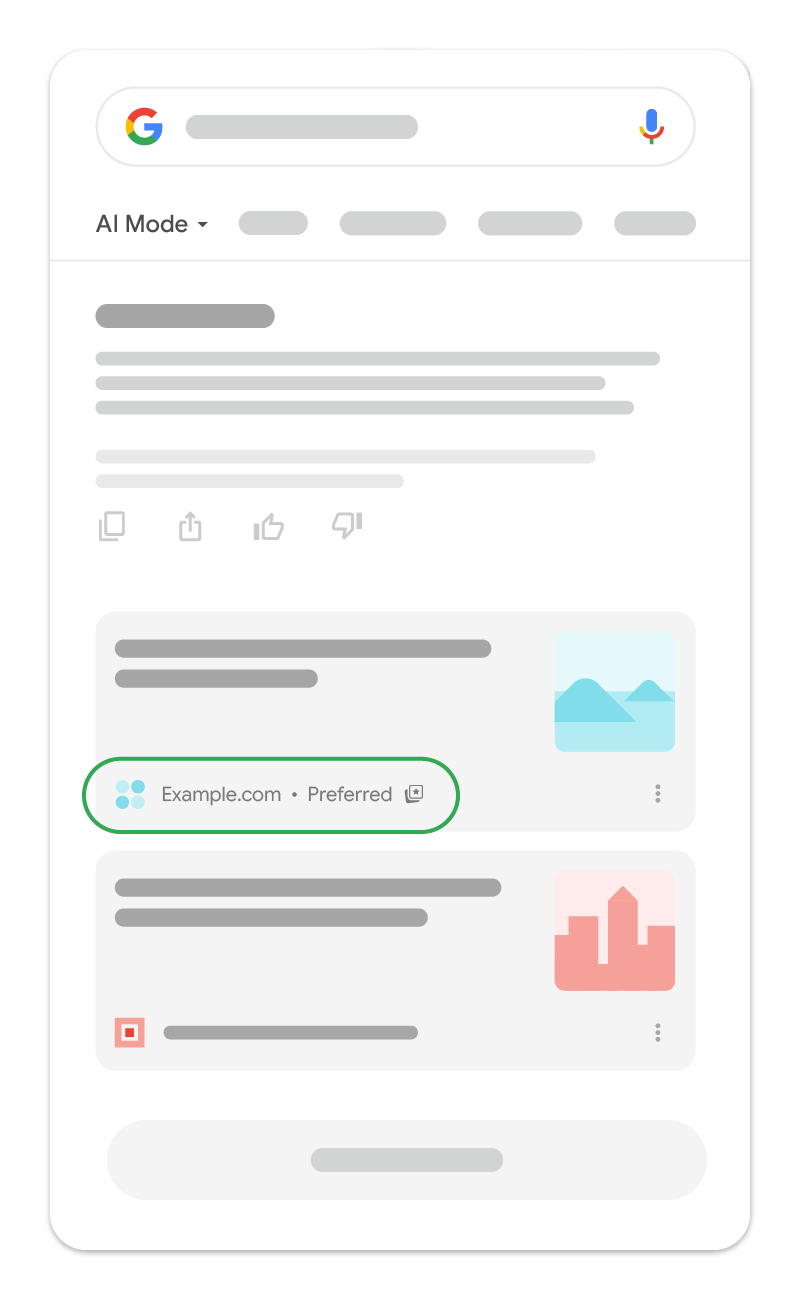
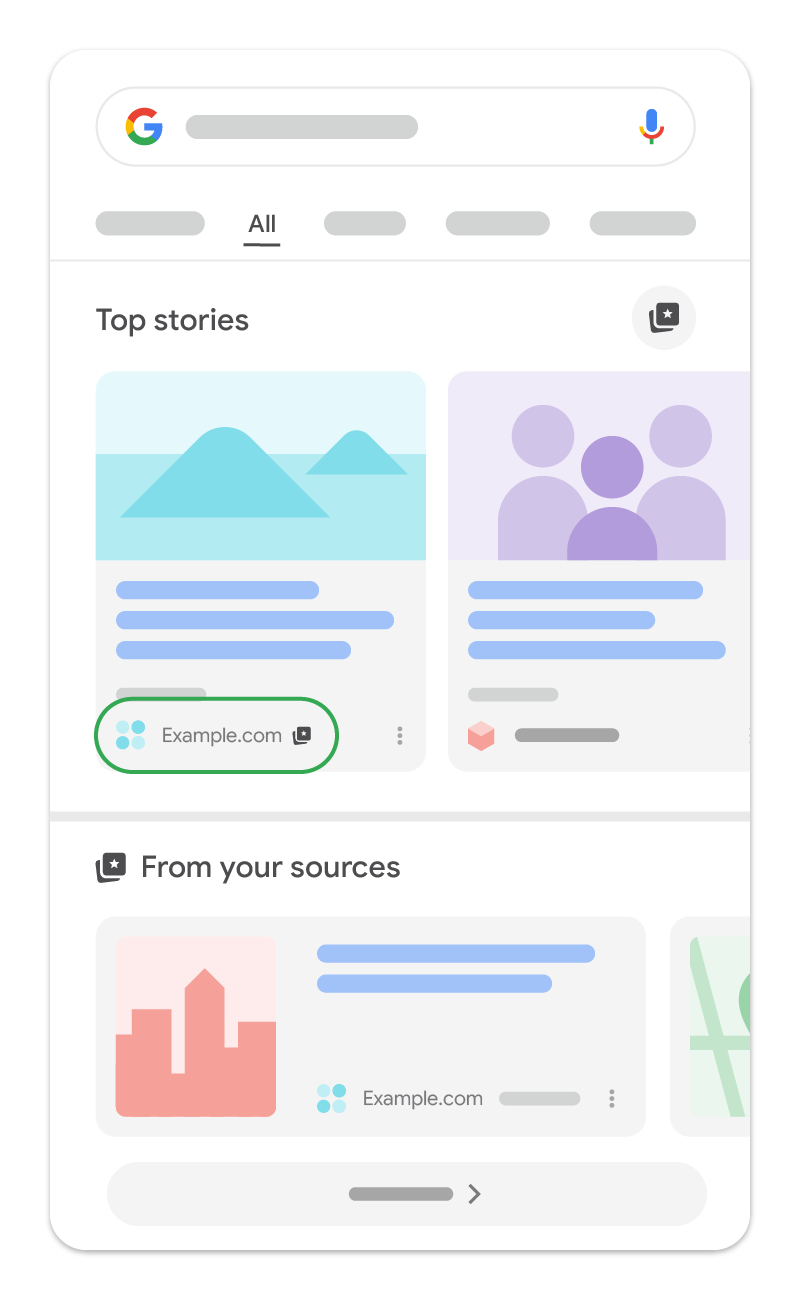
Why Preferred Sources is earned, not ranked
There is no algorithm to optimize here. Regular SEO is you versus a ranking system. Preferred Sources is you versus your reader's habit. The only way in is to ask the people who already like your work to add your site, then make that one tap effortless. The skill is marketing and audience trust, not technical SEO.
Think of it like getting someone to save your number instead of leaving you as an unknown caller. Once you are saved, you get through. Duncan Osborn, a product manager on Google Search, framed it simply: readers will be able to easily spot links in AI responses from the sources they have already selected.
One honest caveat: being preferred does not override being relevant. Google still has to consider your content a good match for the question. If you stop publishing or drift off-topic, you will not show up even for readers who chose you. Preferred status is a thumb on the scale, not a guarantee.
The Preferred Sources timeline so far
Preferred Sources rolled out in stages over roughly a year. Seeing the path makes the trend obvious: Google keeps widening where your readers' choices count, from one news module to the full AI answer experience.
| Date | Milestone | What it meant |
|---|---|---|
| Aug 2025 | Launch in US and India | Readers could pick sources, shown in Top Stories only |
| Dec 2025 | English global, ~90,000 sources | Rolled out to English worldwide, adoption started building |
| Apr 2026 | All languages, ~200,000 sources | Available in every language Google Search supports |
| May 27, 2026 | AI Overviews + AI Mode, 345,000+ sources | Picks now surface inside AI answers, Highly Cited label widened |
Where do your Preferred Sources show up?
Once a reader adds you, your content gets a visible edge in four places. The first two have been live since launch. The last two are the May 2026 expansion, and the reason this is worth acting on now.
- Top Stories: a dedicated "From your sources" row plus a stronger spot in the main news carousel.
- Discover: your articles appear more often in that reader's personalized feed.
- AI Overviews: your link can be cited in the AI summary at the top of results, with a "Preferred" label.
- AI Mode: the same labeled citation inside Google's full conversational answers.
Why AI Mode is the biggest surface for a preferred source
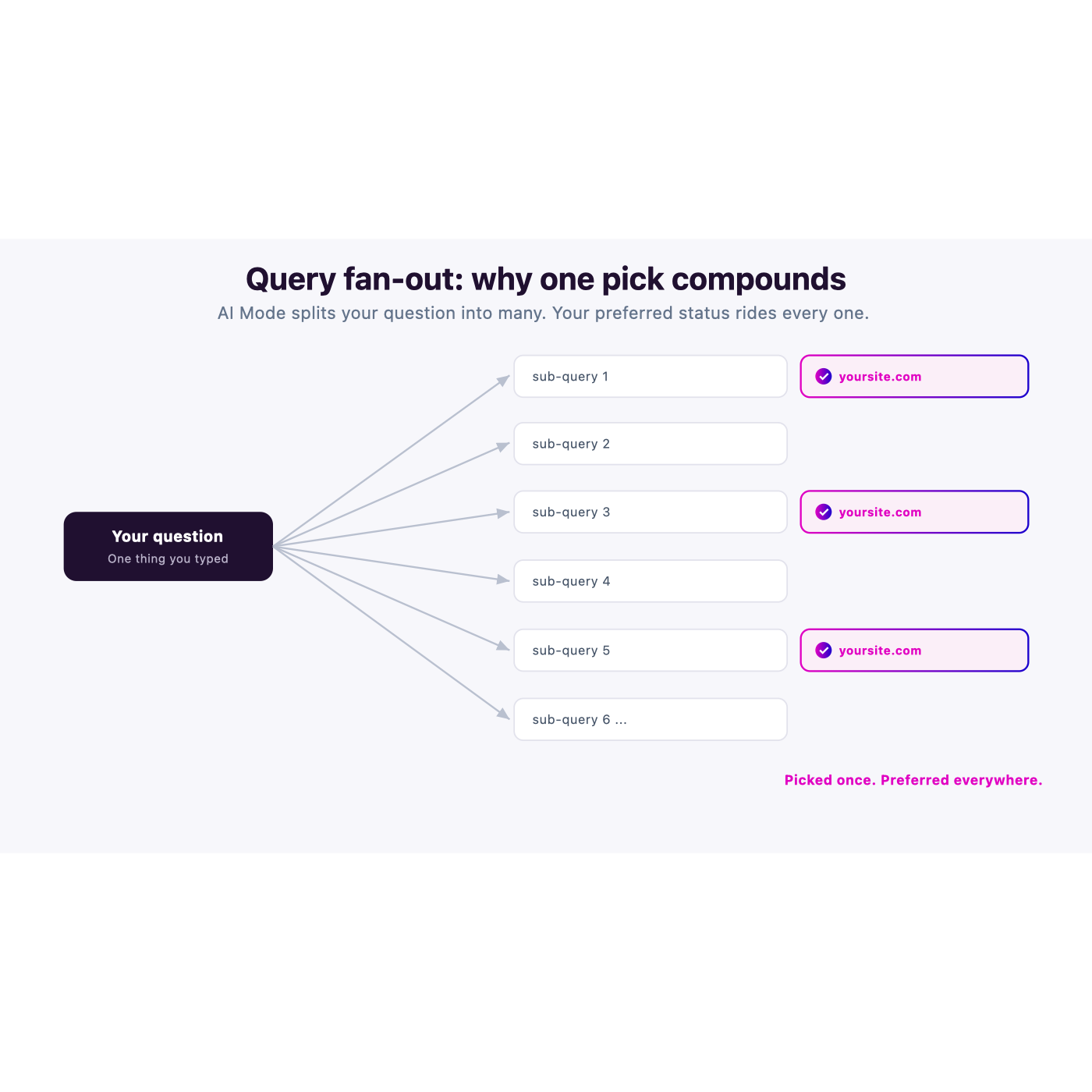
AI Overviews and AI Mode are not the same size of prize. An AI Overview is one summary box, so you either make it or you do not. AI Mode is Google's full conversational tab, and under the hood it works differently: it takes your one question, quietly splits it into a fan of related sub-questions, runs them all, then stitches the answers into one response. Google calls this query fan-out.
That is why one AI Mode conversation is worth more to a preferred source than a single Overview. One question can trigger eight or ten hidden searches, plus a few follow-up turns after that, and your preferred status applies to every one of them. A reader who added you once is voting for you across their whole session, not a single query.
So the same opt-in that earns you a label in an Overview compounds in AI Mode. Being picked is not a one-slot win there, it is a thumb on the scale for the entire back-and-forth. That compounding is unique to the conversational surface, and it is the reason to earn a reader's choice before your competitors think to ask.
Are you eligible, and where is the actual link?
Eligibility works at the domain and subdomain level only. A root domain like yourdomain.com qualifies, and a subdomain like news.yourdomain.com qualifies, but a folder like yourdomain.com/blog cannot be added on its own. A reader is choosing your whole site, not one section.
The mechanism is a single URL. Send a reader to google.com/preferences/source?q=yourdomain.com and they add you in one tap while signed in to their Google account. There is no application and no approval queue on the reader's side.
- Official badge: Google provides an "Add as a preferred source" button in 16 languages. Use it unmodified.
- Placement: put the button where a happy reader finishes, right after your article, not buried in a homepage hero.
- Cross-device: a reader's choice syncs across the devices where they are signed in, so one tap follows them everywhere.
- Publisher recognition: Google only lists sites it already treats as regular publishers, so a brand-new domain can show "No results" in the picker for weeks.
Passive vs active: how do you actually get readers to add you?
A button on its own will not move the needle. The sites getting real sign-ups treat this like a small product launch and ask their audience directly, more than once. There are three levels of effort, and the gap between them is large.
Tag the opt-in link with a UTM so you can count clicks, and watch your branded search at the same time. One more reason to move now: adoption is still tiny. Only low single-digit percentages of US users have added any source at all, so the readers who love your work are not being asked by your competitors yet.
| Approach | What it is | Expected yield |
|---|---|---|
| Passive | A footer or sidebar button only | Minimal, most readers never notice it |
| Semi-active | A short post explaining the feature plus the button | A solid default for most sites |
| Active | Dedicated email, social posts, and reminders to the one-tap link | Highest, by a wide margin |
How do you measure Preferred Sources with no dashboard?
Google gives publishers no native analytics for Preferred Sources. There is no report that tells you how many readers added you, or how often your "Preferred" label showed. So you measure it with proxies, and you accept that they are directional, not exact.
- Deep-link clicks: track clicks on your UTM-tagged opt-in link. This is your best single proxy for sign-ups.
- Branded search: watch Search Console for a lift in people searching your name, since loyal readers search you directly.
- Return visits: in GA4, watch returning-visitor frequency from organic, which should climb as more readers prefer you.
- No native dashboard: do not wait for one. Google has not signaled that publisher-side reporting is coming.
Highly Cited vs Preferred Sources, and how AI visibility compounds
Preferred Sources is one of three loyalty levers Google shipped together, and they are easy to mix up. Preferred Sources is trust earned from your audience, the readers who choose you. The Highly Cited label, widened the same week, is trust earned from your peers, other sites that link to and cite your work. Search Profiles are entity pages that show who you are in Discover.
They stack. Audience trust and peer trust pull in the same direction, and both feed how often AI answers reach for you. This is why AI search is worth your attention now: the old game was ranking for a keyword, and the new game is becoming a name that both people and AI engines recognize and return to. The brands that lock in reader choices early become the default their competitors have to dislodge later.
What to do this week
You do not need a big project to start. The work is small and the window is open, so the fastest movers get the easy sign-ups before the field fills up.
- Add the official "Add as a preferred source" button to the end of your best articles.
- Send one email to your list explaining the feature and linking the one-tap URL.
- Post the same ask on the social channels where your audience already follows you.
- Tag every opt-in link with a UTM so you can see what worked.
- Keep publishing fresh, on-topic content so Google keeps you eligible and relevant.
FAQs
Questions this resource answers
What are Google Preferred Sources?
+
It is a Google setting where readers pick the sites they trust most. Once someone adds you, Google shows more of your content to that person across Top Stories, Discover, AI Overviews, and AI Mode. As of May 27, 2026, your link also appears inside AI answers for the people who chose you.
What changed with Preferred Sources on May 27, 2026?
+
Google extended Preferred Sources into AI Overviews and AI Mode, so the sites a reader picks now appear, with a "Preferred" label, inside AI answers and not just in Top Stories. Google also reported more than 345,000 sources selected and widened the Highly Cited label the same day.
Does Preferred Sources work in Google AI Mode or only AI Overviews?
+
Both, since the May 27, 2026 expansion. AI Mode is the higher-leverage surface: Google splits your question into many sub-queries, a behavior called query fan-out, and runs follow-ups, so a source the reader picked can surface across the whole conversation, not just one answer box.
Is Preferred Sources a ranking factor I can optimize for?
+
No. There is no algorithm to optimize. The only way in is to get real readers to add your domain by name. Your job is to make the ask clear and the one-tap link easy to find, usually right after your articles.
Am I eligible if my content lives in a subfolder?
+
Only domains and subdomains can be added, not subfolders. A reader adds your whole site at the root domain, for example yourdomain.com, so a path like yourdomain.com/blog cannot be selected on its own.
Where do I send readers to add my site?
+
Send them to google.com/preferences/source?q=yourdomain.com, swapping in your domain. While signed in to Google, they add you in one tap. Google also provides an official badge button in 16 languages that you can place at the end of your articles.
How much does an active campaign actually help?
+
Industry reports describe many times more sign-ups from active campaigns, a dedicated email plus social plus reminders, than from a passive footer button. The sample sizes are not public, so treat it as directional, but the direction is clear: ask on purpose, repeatedly.
How do I measure it with no dashboard?
+
Google gives publishers no native analytics for this. Your best proxy is click tracking on your UTM-tagged opt-in link, supported by watching branded search trends and return-visit frequency in GA4.
How is this different from the Highly Cited label?
+
Preferred Sources is trust earned from your audience, the readers who choose you. Highly Cited is trust earned from your peers, other publishers who cite your work. Both rolled out the same week and both compound, so it is worth building toward each.
How long before my site shows up in the picker?
+
Expect weeks, not days. A new domain showing "No results" is normal. Google needs to recognize you as a regularly-updated, organization-backed publisher first, so keep publishing on a real cadence while it catches up.
Free kit
The Liquid snippet, the opt-in copy, and the checklist to ask your readers to make you a preferred source for Google's AI surfaces. Set it up in 15 minutes. Get the free kit→
One useful AI tool a week
Short notes. Practical systems. No daily emails.